
The short answer
Do not water from the leaf shape alone. Feel the soil or potting mix at root depth first. Dry roots, saturated roots, midday heat, sucking insects, spray drift and physical damage can all leave foliage curled or limp.
If the root zone is dry and the plant normally needs steady moisture, water thoroughly and watch whether it recovers. If the root zone is already wet, adding water can make low-oxygen root stress worse; check drainage and roots instead.
Your plant, your next check
Curling or drooping leaves on your plant?
Photograph the affected leaves and the whole plant. Note whether the root zone is wet or dry, when the drooping appears and whether the plant recovers overnight. Explore possible causes and what to inspect next.
Try asking: “My plant’s leaves are [curling or drooping]. The soil feels [wet or dry], and this happens [when]. What should I check first?”
When the app asks what you need, choose “Help a struggling plant.” Save its dated check and return to the same plant if symptoms change.
Any introductory trial is shown in the app, subject to Apple’s offer and your eligibility. Apple shows its duration, the price afterward and the renewal period before you subscribe. A trial renews to the selected paid plan unless canceled. Compare free and Premium, prices and terms.

On a computer? Scan with your iPhone, then keep this guide open while you photograph your plant.
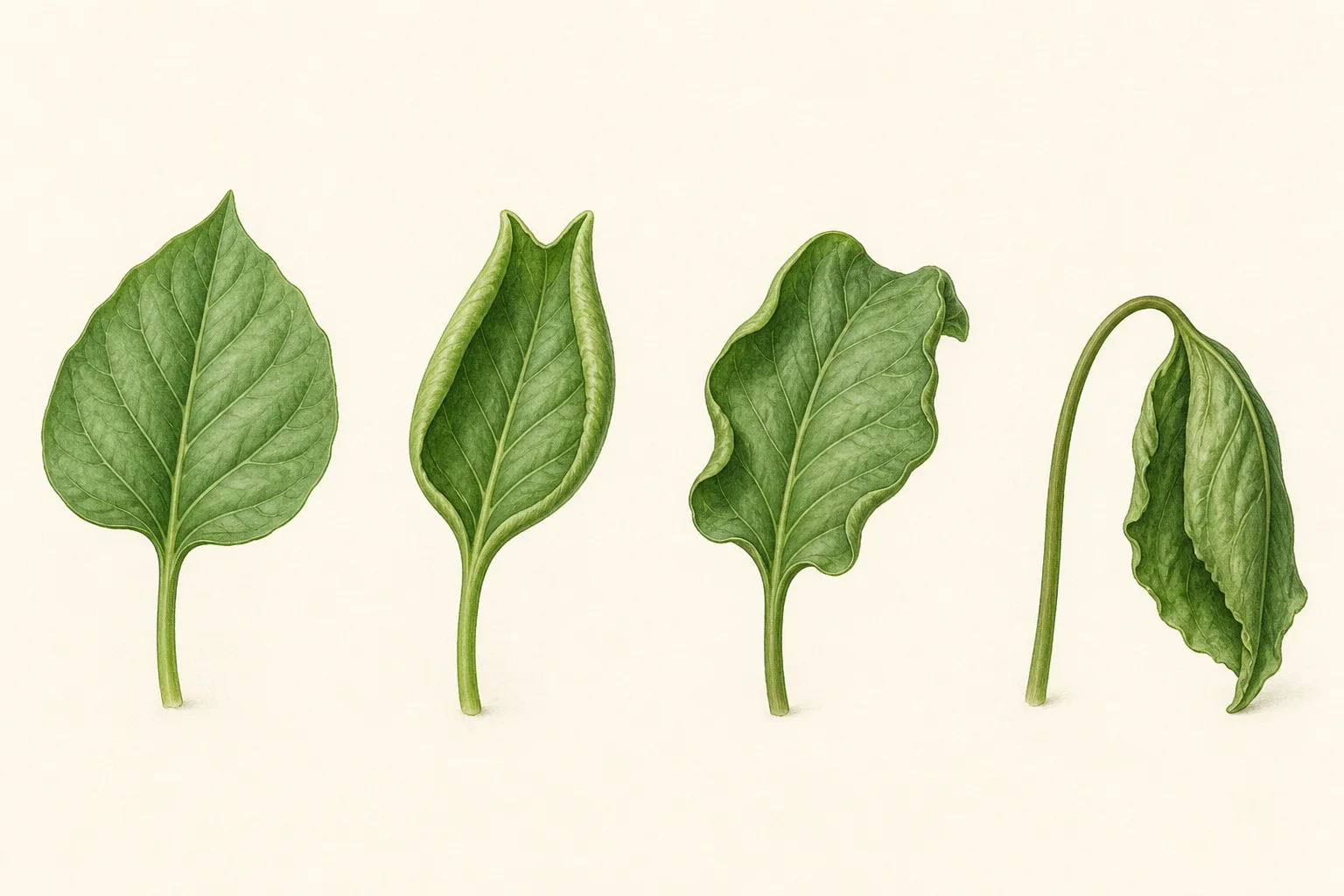
Leaf roll, curl, wilt and droop are different clues
Wilting or drooping means leaves or stems have lost firmness. That may follow dry roots, impaired water uptake, heat, root damage or a stem problem. Curling or rolling is a change in leaf shape: margins may roll upward or downward, a leaf may cup, or new growth may twist. Heat and moisture stress can do this, but distorted young growth also makes pests, chemical exposure and a smaller set of plant-specific diseases worth checking.
Some plants naturally fold or droop during the hottest part of the day and recover as temperatures fall. A plant that is still limp the next morning, or declines while its root zone remains wet, needs a closer check.
Use this decision table before changing care
| What you find | What it may support | Next check |
|---|---|---|
| Dry root zone; flexible, limp leaves | Water deficit or a root ball that was not fully wetted | Water to the full root depth, then confirm drainage and recovery |
| Wet root zone; drooping or yellowing continues | Low root oxygen, damaged roots or blocked drainage | Stop automatic watering and inspect drainage, odor and root firmness |
| Leaf edges roll upward in heat or bright exposure | A moisture-conservation or heat response | Check root moisture, reflected heat and whether the plant recovers overnight |
| Young leaves curl around sticky residue or insects | Sap-feeding pests such as aphids, thrips or whiteflies | Inspect shoot tips and both leaf surfaces; identify the pest before treatment |
| Plant droops in heat but recovers by morning | A temporary heat response | Check root moisture and exposure; judge the plant when temperatures are lower |
| Distortion appears mainly on one side or after nearby spraying | Exposure, drift or physical injury | Reconstruct what contacted the plant and avoid adding another spray |
| Only one shoot collapses | A local stem, pest or physical problem | Inspect that stem from tip to base rather than treating the whole plant |
Five checks in the most useful order
1. Feel the active root zone
A dry surface does not prove dry roots, and rain can miss a pot under an eave or run around a shrunken root ball. Check several inches down where roots are active. For a container, compare its weight with the same pot after a thorough watering and make sure excess water can leave.
2. Compare morning, midday and evening
Take a photo at the same angle at two times of day. Temporary midday droop that resolves is different from an overnight decline. Also note a recent heat wave, move into direct sun, strong drying wind, repot or transplant.
3. Inspect the newest growth and leaf undersides
The University of California notes that aphids, thrips and whiteflies can curl young leaves while feeding. Look for insects, cast skins, sticky honeydew, stippling or webbing. Damage may remain after the pest has gone, so distinguish old distorted tissue from actively changing growth. Source: UC Agriculture and Natural Resources
4. Map the distribution
Is every plant affected, only one species, one side of one plant, the newest leaves or older leaves? A sharp edge to the damage can suggest contact or exposure. A problem that follows a low, wet area points in a different direction from damage on a hot wall.
5. Reconstruct recent changes
Write down watering, fertilizer, weed control, cleaning sprays, frost, heat, construction, repotting and pruning from the previous two weeks. Symptoms can appear after the event, so today’s conditions are only part of the evidence.
Photos that make a diagnosis more useful
- Show the whole plant and its position.
- Show one healthy and one affected shoot together.
- Photograph the upper and lower surface of an affected leaf.
- Show the soil surface, container and drainage arrangement.
- Record whether the plant changed through the day.
When to stop troubleshooting alone
Seek local Extension, a plant clinic, certified arborist or other qualified professional when a mature tree loses canopy, several plants decline in a spreading pattern, roots or stems have extensive decay, or the result would guide pesticide use. Do not use a photo identification to decide whether an unknown plant is safe to eat or touch.
Illustrative observation
A plant droops at midday and recovers by morning
What is observed: leaves lose firmness during a hot, exposed afternoon, the plant regains its normal posture overnight and the root zone still contains moisture below the surface.
What that supports: a temporary heat response is more plausible than immediately assuming permanent drought injury. Check the plant again in cooler conditions and avoid adding water solely because of one midday photograph.
This example is based on the cited guidance. It is not a recorded Garden Sage plant case.