
The short answer
One yellow lower leaf may be normal. If the yellowing spreads, check the soil around the roots. Note whether old or new leaves changed first, feel the soil below the surface, confirm drainage, and inspect both sides of the leaves before watering or feeding.
Yellow leaves can result from overwatering, underwatering, low light, temperature stress, pests, damaged roots or problems taking up nutrients. Where the yellowing starts and what has changed recently can help you narrow down the cause.
Your plant, your next check
Yellow leaves on your plant?
Photograph the whole plant and the yellowing leaves. Tell Garden Sage which leaves changed first, when it began and whether the root zone feels wet or dry. Explore possible causes and what to inspect next.
Try asking: “My plant’s leaves started yellowing [when]. The soil feels [wet or dry]. What should I check first?”
When the app asks what you need, choose “Help a struggling plant.” Save its dated check and return to the same plant if symptoms change.
Any introductory trial is shown in the app, subject to Apple’s offer and your eligibility. Apple shows its duration, the price afterward and the renewal period before you subscribe. A trial renews to the selected paid plan unless canceled. Compare free and Premium, prices and terms.

On a computer? Scan with your iPhone, then keep this guide open while you photograph your plant.
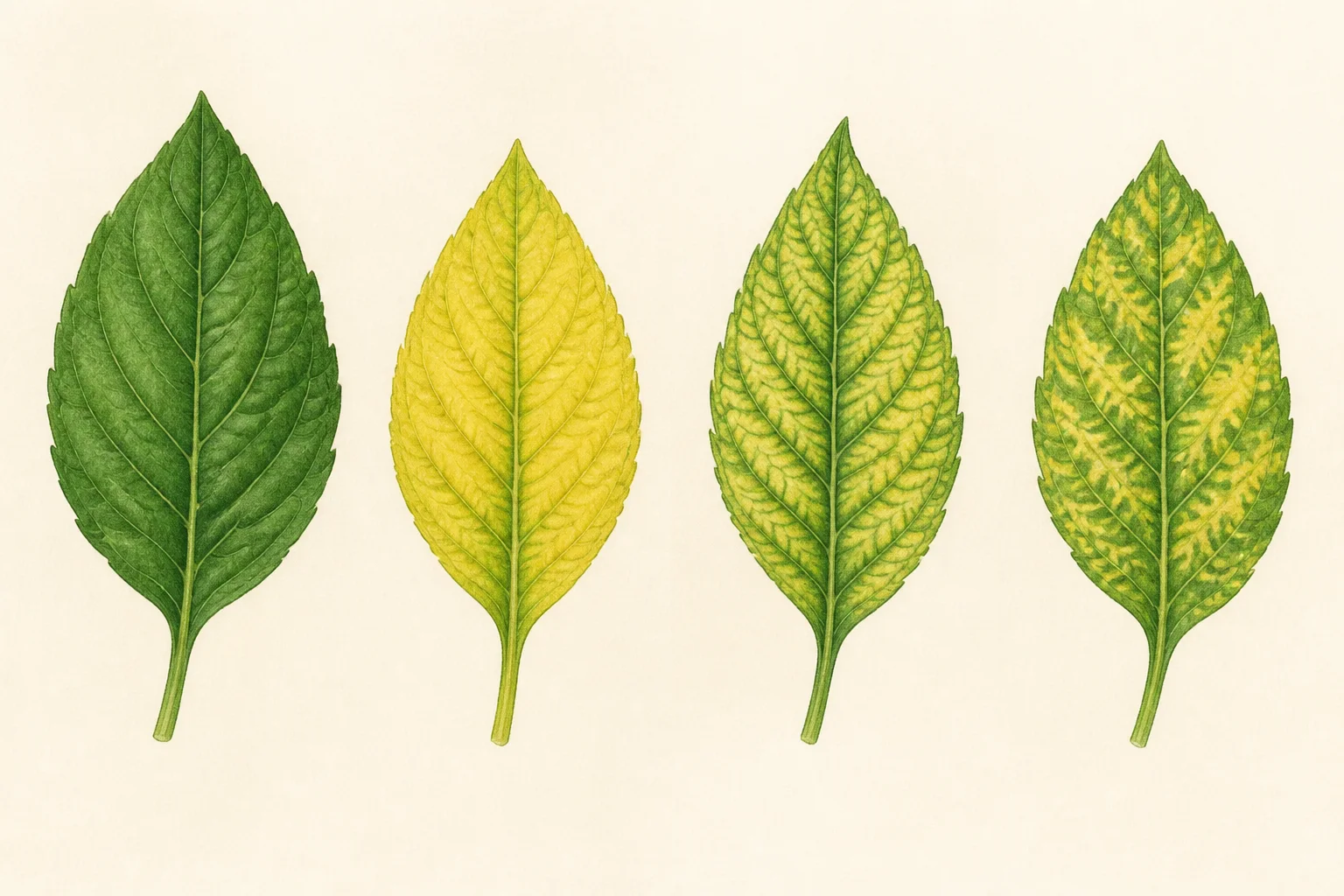
First, decide whether the yellow leaf is actually a problem
One older, lower leaf turning yellow on an otherwise vigorous plant can be normal ageing. Deciduous plants shed leaves seasonally, and evergreens also replace older foliage. A pattern affecting many leaves, young growth or the whole plant deserves a closer look.
Do not begin by adding fertilizer. Waterlogging, drought, low light, cold, root damage, pests and disease can all reduce a plant’s ability to use nutrients. Feeding a stressed root system may add another problem without fixing the cause. Source: RHS nutrient-deficiency guidance
Use the pattern of yellowing as your first clue
| Yellow-leaf pattern | What it may support | Best next check |
|---|---|---|
| One or two oldest lower leaves | Normal leaf replacement, especially if new growth is healthy | Watch whether the pattern spreads before changing care |
| Many leaves yellow while soil stays wet | Low root oxygen, poor drainage or root damage | Check moisture at depth, drainage holes and root firmness |
| Plant is limp and the root zone is dry | Water deficit or an incompletely wetted root ball | Water to root depth, let excess drain and watch the response |
| New leaves are pale between greener veins | Restricted nutrient availability, sometimes related to soil pH | Confirm the plant’s soil needs before choosing a feed |
| Yellow patches include spots, webbing or sticky residue | A pest, leaf disease or physical damage rather than a general deficiency | Inspect both leaf surfaces and compare the leaf-spots guide |
Older leaves turn yellow first
This can happen through normal ageing, prolonged low light or a shortage of a mobile nutrient such as nitrogen or magnesium. Look at the plant’s overall growth and whether new leaves remain healthy. If an indoor plant has recently moved to a darker position, light may be the more immediate explanation.
Young leaves turn yellow first
Pale new growth with greener veins can be associated with iron availability, often because soil or compost conditions prevent uptake rather than because iron is completely absent. Check that the plant is suited to the soil pH before adding a specialised feed.
Yellowing appears between green veins
This pattern is often called interveinal chlorosis. Which leaves are affected first matters. The RHS guide to chlorosis explains that iron problems tend to show on younger leaves, while manganese and magnesium problems more often begin on older foliage.
Yellow edges, spots or patches appear
Look for more evidence: scorching at the edge, fungal growth, webbing, sticky residue, distorted growth or visible insects. A neat color pattern is only one clue. Photograph both sides of an affected leaf and the surrounding healthy growth.
A six-step yellow-leaf check
- Check moisture below the surface. Push a finger or wooden stick a few inches into potting mix, or dig a small inspection hole beside an outdoor plant. The top can look dry while the root zone stays saturated.
- Confirm drainage. Empty standing water from a saucer or decorative outer pot. Make sure container drainage holes are open. Outdoors, look for compacted soil or water collecting around the crown.
- Review light and temperature. Note a recent move, seasonal drop in light, cold window, draft, heat source or sudden spell of bright sun.
- Inspect leaves and stems. Check both leaf surfaces, growing tips and stem joints for insects, webbing, scale-like bumps, mildew, spots or distorted new growth.
- Look at roots when practical. Healthy roots are generally firm. Soft, dark or foul-smelling roots point toward decay; a solid mass of congested roots may mean the plant needs more space.
- Change one thing at a time. Record what you changed and wait for new growth. Old yellow tissue usually does not become green again, so judge recovery by the plant’s next leaves.
When yellow leaves follow watering problems
Consistently wet compost can deprive roots of oxygen and reduce nutrient uptake. Very dry roots can also stop supplying leaves properly. Both situations may produce yellowing and wilting, which is why the soil check matters more than the leaf symptom alone. Use the overwatering or underwatering guide before deciding which direction to move.
What to record for a plant-care app or expert
Take one image of the whole plant and one close-up of the yellowing pattern. Note whether old or new leaves changed first, how the soil feels, when it was last watered, and any recent move, repot, frost, heat or feeding. A stronger record produces a more useful answer than “yellow leaves” alone.
For a first check in the Garden Sage plant health app, choose the photo that best shows the pattern and include your moisture observation in the question. For example: “The oldest leaves yellowed first, the root zone is still wet and I moved the plant last week. What should I check next?” A photo cannot measure soil moisture or confirm a nutrient deficiency.
Keep the observation with the saved plant, then compare new growth and whether yellowing spreads. The sixty-second care journal gives you a short record to use in the app or on paper.
If the plant is declining rapidly, has extensive root decay, or may pose a toxicity risk, seek a qualified local professional rather than relying on a photo diagnosis.
Illustrative observation
Older leaves yellow, while new growth stays green
What is observed: one or two of the oldest lower leaves are yellow, newer leaves remain normally coloured, the root zone is not saturated and the pattern has not spread during a week of observation.
What that supports: normal leaf replacement is more plausible than an urgent whole-plant treatment. It does not confirm nutrient status or rule out a plant-specific problem. Record the next new leaf and act only if the pattern spreads or growth weakens.
This example is based on the cited guidance. It is not a recorded Garden Sage plant case.