
The short answer
Do not assume every leaf spot is fungal. Bacteria, fungi, insects, mites, spray droplets, sun, cold, hail, rubbing and nutrient or root stress can create spot-like damage.
Mark one affected leaf, photograph both sides, and check again in two or three days. Note whether the spots grow, appear after wet weather or come with insects or unusual growth underneath the leaf. These details tell you more than the color alone.
Your plant, your next check
Not sure what the spots mean?
Photograph spotted and healthy parts of the leaf. Say when the spots appeared, whether they are spreading and what changed in the plant’s care. Explore possible causes and what to inspect next.
Try asking: “These spots appeared [when] and are [spreading or unchanged]. What should I check first?”
When the app asks what you need, choose “Help a struggling plant.” Save its dated check and return to the same plant if symptoms change.
Any introductory trial is shown in the app, subject to Apple’s offer and your eligibility. Apple shows its duration, the price afterward and the renewal period before you subscribe. A trial renews to the selected paid plan unless canceled. Compare free and Premium, prices and terms.

On a computer? Scan with your iPhone, then keep this guide open while you photograph your plant.
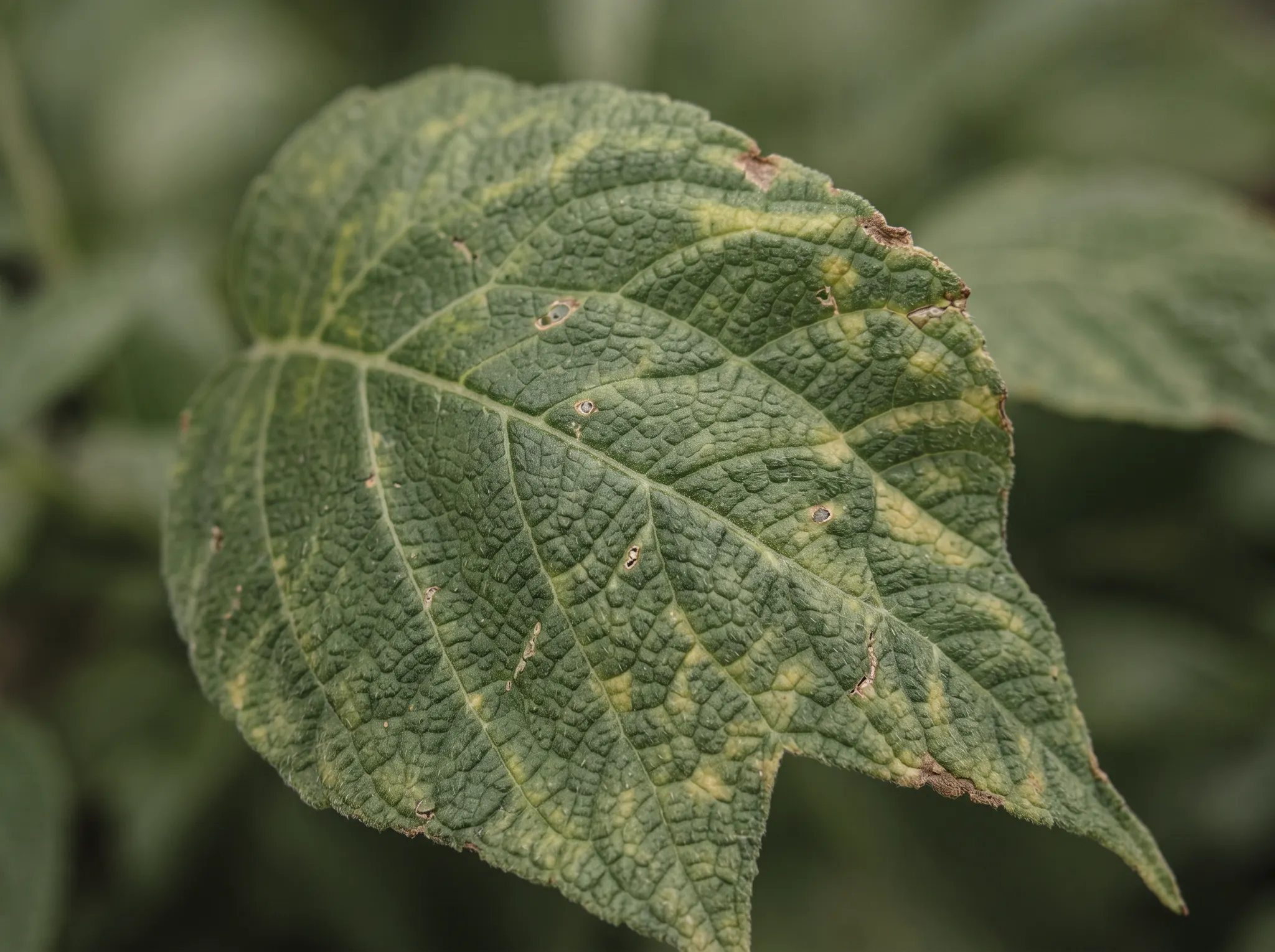
Document seven traits before naming a cause
- Shape: circular, angular, irregular, streaked or made of tiny dots?
- Border: sharp, water-soaked, yellow-haloed, purple, raised or fading gradually?
- Veins: does the damage stop at a vein, cross it, or follow it?
- Surface: flat, sunken, blistered, fuzzy, powdery, sticky or removable?
- Leaf side: what appears directly beneath the spot?
- Distribution: old or new leaves, lower or upper canopy, one side or every plant?
- Change: stable scar, expanding lesion, merging spots or continuing leaf drop?
What the pattern may suggest
| Observation | Possibilities to compare | What to check next |
|---|---|---|
| Spots expand after wet weather or overhead watering | Some fungal or bacterial leaf spots | Species, lesion edge, lower surface, spread pattern and diagnostic guidance |
| Many identical marks appear only on exposed leaves | Sun, cold, hail, spray or contact injury | Weather and treatment timing; protected versus exposed foliage |
| Tiny pale stippling with insects, webbing or dark specks below | Mites or sap-feeding insects | Magnified underside inspection and pest identification |
| Raised ring, blister or abnormal growth | Gall, mite, insect or a plant-specific disease | Side view, underside and species-specific Extension resource |
| Powder or residue wipes away | Surface residue, honeydew/sooty growth or powdery mildew | Texture, reappearance, insects and affected plant parts |
| One stable tear or scar does not expand | Physical damage | New growth and likely rubbing, handling, pet or weather event |
This table narrows the investigation; it does not identify a pathogen. Cornell’s plant-disease guidance emphasizes the difference between a plant’s response (a symptom) and direct evidence of a causal organism (a sign). Similar symptoms can arise from different causes. Source: Cornell University
Separate infectious patterns from environmental injury
Look across the whole planting
Map affected plants rather than collecting only close-ups. A pattern along a spray path, against a reflective wall or under an irrigation line can reveal exposure. Disease may also follow wet, crowded areas, but distribution alone is not proof.
Use time as evidence
Keep one leaf on the plant if practical and safe, and photograph it beside a ruler. Note whether the border expands, the center falls out, new structures appear or nearby leaves develop the same pattern. A one-time injury usually behaves differently from an active process.
Inspect without spreading a possible problem
Start with healthy plants and move toward affected ones. Clean tools after cutting suspect material, avoid handling wet foliage unnecessarily, and do not carry loose leaves from plant to plant. If you send a sample, follow the receiving diagnostic lab’s packaging instructions.
Why spraying first is a poor test
A broad treatment may not match the cause, can injure foliage and can obscure useful signs. University of Maryland Extension notes that most fungal leaf spots on established shrubs are not lethal and that fungicides do not cure leaves that already have spots. Severity, species and diagnosis should drive management. Source: University of Maryland Extension
If a pesticide is warranted after identification, use a product registered for the plant and problem, follow the label, and protect pollinators and people. A photo-based guide cannot provide a safe product choice for every location.
Can spotted leaves recover?
Judge progress by whether new spots appear, existing marks expand or leaves keep falling. A treatment will not erase an existing fungal leaf spot. Many established shrubs tolerate some spotting, but heavy leaf loss and damage on a young or newly planted shrub deserve closer attention. Use plant-specific guidance before removing large amounts of foliage. Source: University of Maryland Extension
Keep the date, an overview and the same close-up for your next check. The plant care journal checklist helps you record what changed without assuming the first suggested cause was correct.
When to use a plant diagnostic lab
Seek local Extension or a plant clinic when spots spread rapidly, cause heavy defoliation, reach stems or fruit, recur on a valuable plant, affect several plants, or would determine pesticide use. Include plant identity, site, irrigation, recent weather and treatments. For wilting, send or show roots and stems as well as leaves because the visible spot may not be the primary problem.
Illustrative observation
Stable marks appear only on exposed leaves after hail
What is observed: similarly shaped scars occur on the exposed side of the plant after a documented hail event, protected leaves are largely unaffected and no new marks appear during the following week.
What that supports: one-time physical injury is more plausible than an actively spreading leaf spot. Continue observing new growth; do not use a fungicide as a diagnostic test.
This example is based on the cited guidance. It is not a recorded Garden Sage plant case.